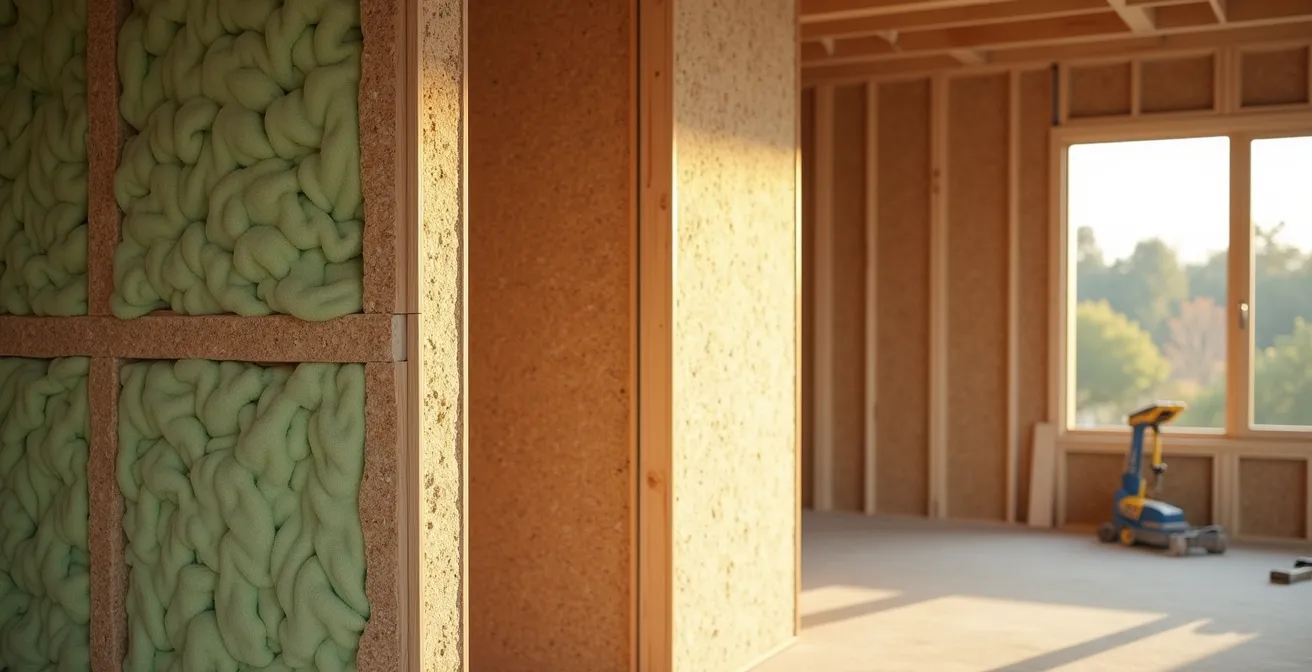
Choosing healthy insulation isn’t about picking a material from a list; it’s about adopting a verification framework to analyze its full lifecycle for hidden risks and true performance.
- “Green” labels can be misleading; true sustainability requires scrutinizing certifications like FSC and understanding a material’s embodied carbon.
- Health impact goes beyond “low-VOC” to include hidden chemical binders and off-gassing periods, requiring careful planning and material selection.
Recommendation: Prioritize materials with transparent documentation (like Environmental Product Declarations) and proven hygrothermal performance over those with simple eco-branding.
You’ve started pulling back the old drywall, and the sight of that dusty, pink fiberglass insulation raises immediate concerns. Your goal is an eco-renovation, but the deeper you dig, the more complex the definition of “healthy” and “sustainable” becomes. The market is flooded with materials advertised as “green,” “natural,” or “eco-friendly,” creating a confusing landscape. Many guides simply list alternatives like cork or sheep’s wool, treating them as universally superior solutions.
This approach is dangerously simplistic. It overlooks the chemical binders, the misleading certifications, and the full lifecycle impact of each material. Is that “reclaimed” wood treated with lead paint? Does that “low-VOC” paint still release harmful compounds for weeks? The conventional wisdom often fails to provide the tools for genuine assessment, leaving you exposed to greenwashing and potential health risks.
But what if the key wasn’t choosing a material, but mastering a process? This guide provides a building consultant’s verification framework. Instead of offering a simple list, we will equip you with the critical questions to ask and the technical concepts to understand. We will move beyond surface-level labels to scrutinize a material’s real-world performance, its hidden chemical components, its true carbon footprint, and the logistical realities of using it in your home.
By adopting this mindset, you can navigate the complexities of sustainable building with confidence. You’ll learn to differentiate between genuine performance and clever marketing, ensuring the materials you choose are truly healthy for both your family and the planet. This framework will empower you to make informed decisions for every aspect of your renovation, from structural elements to the final coat of paint.
This article provides a structured approach to material selection. The following sections break down the key areas of verification you need to master, from thermal performance and material safety to understanding certifications and planning logistics.
Summary: A Consultant’s Framework for Healthy Material Selection
- Hempcrete or Mineral Wool: Which Offers Better Thermal Regulation?
- How to Verify the Safety of Reclaimed Wood for Interior Use?
- Why Your Concrete Floor Has a Higher Carbon Footprint Than You Think?
- The Certification Label That Guarantee Sustainable Forestry (And Which Don’t)
- When to Order Custom Local Materials to Avoid Construction Delays?
- Why “Low VOC” Paint Can Still Off-Gas for Weeks After Drying?
- Why “FSC Mix” Is Not the Same as “FSC 100%”?
- How to Paint a Nursery Without Exposing Your Baby to Harmful Fumes?
Hempcrete or Mineral Wool: Which Offers Better Thermal Regulation?
When comparing insulation materials, the conversation often begins and ends with R-value, a measure of thermal resistance. However, for a truly healthy and comfortable home, this is only half the story. The real differentiator lies in a material’s hygrothermal performance—its ability to manage both heat and moisture. This is where materials like hempcrete and mineral wool reveal their fundamental differences. Mineral wool is hydrophobic; it resists water but does not actively manage humidity. Hempcrete, a mix of hemp hurd and lime, is hygroscopic; it can absorb and release water vapor, acting as a humidity buffer for the indoor environment.
While mineral wool often boasts a higher R-value per inch, hempcrete’s value comes from its dynamic interaction with the building envelope. Its porous structure allows it to “breathe,” moderating indoor humidity and reducing the risk of condensation and mold growth within the wall assembly. Research shows a thermal conductivity for hempcrete between 0.074 and 0.103 W/mK, which is effective, but its true strength is in creating a stable indoor climate. This moisture-regulating capacity can reduce the load on mechanical HVAC systems, leading to energy savings that aren’t captured by a simple R-value metric.
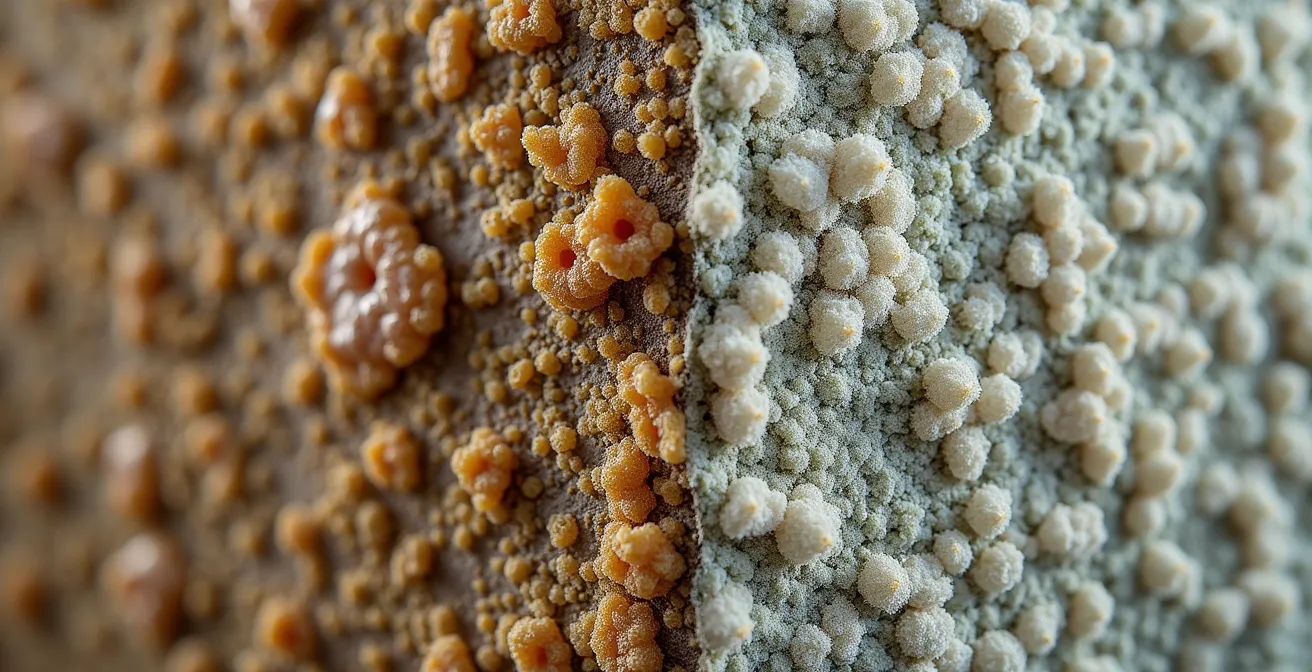
The image above illustrates the textural difference: hempcrete’s open, absorbent matrix versus mineral wool’s dense, inert fibers. This structural difference is key to their performance. The Science Museum’s Hempcrete Museum Store serves as a powerful real-world example. Between 2012 and 2020, the building successfully used its hempcrete walls to moderate relative humidity, meeting stringent museum requirements with less reliance on energy-intensive mechanical systems. This demonstrates that for long-term health and efficiency, evaluating how a material manages moisture is just as critical as how it resists heat.
How to Verify the Safety of Reclaimed Wood for Interior Use?
Using reclaimed wood is often promoted as a top-tier sustainable choice. It diverts waste from landfills and adds unique character to a home. However, its “past life” can harbor hidden dangers that your verification framework must uncover. Without proper scrutiny, you risk introducing lead, pesticides, or chemical flame retardants into your living space. The first step is always to request a detailed history from the supplier: where did the wood come from, and what was its previous application? Wood from an old industrial building or a painted barn carries different risks than beams from a clean, unpainted structure.
A thorough visual inspection is your next line of defense. Look for peeling or layered paint, which could indicate the presence of lead-based paint, common in structures built before 1978. Dark stains or an oily residue might suggest treatment with creosote or other industrial preservatives. However, many harmful substances are invisible. For any wood with a questionable history or painted surface, testing is non-negotiable. You can use an EPA-approved lead test kit for a preliminary check, but for definitive results, sending a sample to a certified lab is the safest route.
Beyond lead, consider other potential contaminants. As the Environmental Working Group notes, even modern materials have complex chemical profiles. While discussing insulation, they state that “Some XPS insulation is manufactured with butadiene styrene brominated copolymer, an alternative to the flame retardant HBCD.” This highlights the prevalence of chemical additives like brominated flame retardants (BFRs) in building materials, which could be present in older wood. Specialized testing services can screen for these. If contaminants are found but the wood is structurally sound and aesthetically valuable, you can use an encapsulating sealant to lock them in. Finally, document all your findings in a “Reclaimed Wood Passport” for your home’s records, a crucial step for future renovations or sale.
Why Your Concrete Floor Has a Higher Carbon Footprint Than You Think?
Concrete is ubiquitous, durable, and often considered a “natural” material. However, its environmental impact is dominated by one key ingredient: Portland cement. The production of cement is incredibly energy-intensive and is responsible for approximately 8% of global CO2 emissions. When you choose a concrete floor, you are locking in a significant amount of “embodied carbon”—the total greenhouse gas emissions generated from manufacturing and transporting that material. This upfront carbon cost is a critical factor in your healthy home equation, with an impact that lasts for the entire life of the structure, which for some buildings can be an estimated 75 years or more.
The focus on operational energy efficiency often overshadows this massive upfront environmental debt. A well-insulated home saves energy over its lifetime, but if it’s built with high-embodied-carbon materials, it can take decades to “pay back” its initial carbon footprint. As a green building consultant, I advise clients to consider this lifecycle impact from day one. Fortunately, the industry is evolving, and several lower-carbon alternatives to traditional concrete are emerging, each with its own profile of benefits and drawbacks.
These alternatives work by replacing a portion or all of the Portland cement with other materials, such as industrial byproducts or even carbon-sequestering plants. Understanding these options is key to minimizing your project’s carbon footprint.
| Material | Carbon Impact | Durability | Availability |
|---|---|---|---|
| Traditional Concrete | High (positive) | Excellent | Widely available |
| Geopolymer Concrete | Medium (reduced) | Good | Limited |
| Hempcrete | Negative (sequesters CO2) | Moderate | Growing availability |
| Fly Ash Concrete | Low (recycled content) | Good | Regional variation |
As this comparative analysis shows, materials like hempcrete can even be carbon-negative, meaning they sequester more CO2 than is emitted during their production. While options like Geopolymer or Fly Ash concrete may have limited regional availability, asking your contractor about them sends a strong market signal. Making a conscious choice to reduce the embodied carbon of your foundation and floors is one of the most impactful decisions you can make in a sustainable renovation.
The Certification Label That Guarantee Sustainable Forestry (And Which Don’t)
In the search for sustainable materials, certification labels seem like a trustworthy shortcut. Seeing a logo like FSC (Forest Stewardship Council) or GREENGUARD on a product provides a sense of assurance. However, not all certifications are created equal, and relying on them without understanding their scope can be misleading. Your verification framework must include a critical look at what these labels actually promise. For example, GREENGUARD Gold is an excellent certification for indoor air quality, as it sets strict limits on VOC emissions for products like adhesives and finishes. But it says nothing about where the wood itself came from or if it was harvested sustainably.
Similarly, a forestry certification alone isn’t enough. You must verify if the certification covers the entire supply chain (a “chain of custody” certification) or only the forest where the trees were harvested. Without a complete chain of custody, there’s no guarantee the product you’re buying is the same one that was sustainably sourced. For a truly holistic view, look for a Cradle to Cradle certification, which assesses a product’s entire lifecycle, from material health and reutilization to water stewardship and social fairness. This is a much more comprehensive measure of sustainability.
Your analysis should also weigh the trade-offs between certified and uncertified materials. Is it more sustainable to buy locally sourced, uncertified timber from a small, well-managed woodlot you can visit yourself, or to purchase FSC-certified wood that has been shipped across the country? The answer isn’t always clear-cut and requires a pragmatic assessment of the total environmental impact. To build your expertise, you should also research emerging unlabeled materials like thermally modified wood, which uses a non-toxic heat process to improve durability. The ultimate tool for verification is the Environmental Product Declaration (EPD). This is a standardized, third-party-verified report that documents a product’s environmental impact, from raw material extraction to end-of-life. Always request EPDs from manufacturers for full transparency.
When to Order Custom Local Materials to Avoid Construction Delays?
Choosing innovative, sustainable materials like hempcrete or custom-milled local timber is a fantastic way to improve your home’s health and reduce its carbon footprint. However, unlike grabbing a bag of concrete mix from a big-box store, these materials require significant advance planning. The supply chains are often smaller and more regional, meaning lead times can be much longer. Failing to account for this is one of the most common causes of delays and budget overruns in a green renovation project.
A prime example is the planning required for hemp-based insulation. The company Hempitecture, a pioneer in this space, highlights that the nascent industry faces high demand for hemp fiber. This means you can’t decide to use it last minute. Furthermore, while building departments are increasingly approving these materials, they are still new to many local inspectors. You must budget an additional 2-4 weeks in your timeline just for technical conversations and potential educational sessions with your local building authority to get their buy-in. This planning phase is a critical part of the process that happens long before any material arrives on site.
To avoid these pitfalls, your project plan must be built around the lead times of your chosen materials. A proactive ordering strategy is essential for a smooth construction process.
Your Strategic Ordering Plan for Local and Custom Materials
- 8-12 weeks before need: Place orders for materials requiring significant production or curing time, such as hempcrete for cast-in-place applications.
- 6-8 weeks before need: Schedule and confirm orders for any custom-milled items like structural beams or specialized timber from local sawyers.
- 4-6 weeks before need: Finalize orders for specialized natural insulation products that are not kept in stock locally, such as sheep’s wool or cork panels.
- 3-4 weeks before need: Confirm delivery dates for bulky, semi-custom materials like air-dried earth blocks or large format cork panels.
- 2-3 weeks before need: Conduct a final coordination call with local artisans or specialized installers to align their schedule with confirmed material delivery dates.
By integrating this timeline into your project management, you transform a potential source of stress and delay into a predictable part of the build. This foresight is a hallmark of a well-managed, professional-grade renovation.
Why “Low VOC” Paint Can Still Off-Gas for Weeks After Drying?
The term “VOC” (Volatile Organic Compound) has become a major focus for health-conscious homeowners, and for good reason. These chemicals, found in everything from paints to adhesives, can be released into the air and contribute to poor indoor air quality. In response, many manufacturers now offer “Low VOC” or even “Zero VOC” products. However, these labels can create a false sense of security. The critical issue that is often overlooked is the duration of off-gassing and the presence of other harmful, non-VOC chemicals.
A paint or finish can be technically “Low VOC” but still contain other semi-volatile compounds that are released slowly over weeks or even months after the paint feels dry to the touch. This prolonged off-gassing period is particularly concerning in enclosed spaces like bedrooms or nurseries. Furthermore, the focus on paint can distract from other sources of harmful chemicals. Binders and additives in other building materials are a significant concern. The Environmental Working Group provides a stark example from the world of insulation.
Fiberglass—one of the most common types of insulation—used to contain formaldehyde binding agents, which have mostly been phased out. But some forms of mineral-wool fiber insulation may still contain as much as 5 percent formaldehyde.
– Environmental Working Group, EWG’s Healthy Living: Home Guide
This is a crucial point: a material can be excellent at thermal insulation but still introduce a known carcinogen like formaldehyde into your home. The data shows that some mineral wool can contain as much as 5 percent formaldehyde by weight in its binder. This underscores the need for your verification framework to look beyond a single metric like “VOC content” and investigate the full chemical composition of every material you bring into your home.
Why “FSC Mix” Is Not the Same as “FSC 100%”?
The Forest Stewardship Council (FSC) label is one of the most recognized marks of sustainable forestry. When you see it on a wood product, you might assume the entire product comes from a well-managed forest. However, the FSC system has three distinct labels, and the differences between them are significant. Failing to understand this distinction is a common pitfall for even the most well-intentioned renovator. The most robust certification is FSC 100%. This label guarantees that every fiber in the product comes from an FSC-certified forest that has been independently audited to meet the highest standards of environmental and social responsibility.
The most common label you will encounter, however, is FSC Mix. This label indicates that the product is made from a combination of sources: at least 70% of the material must come from either FSC-certified forests or post-consumer recycled material. The remaining 30% can be “Controlled Wood.” Controlled Wood is not FSC-certified; it is wood that has been vetted to meet a minimum standard to avoid the worst forestry practices, such as illegal logging or harvesting in violation of traditional and civil rights. While better than nothing, it does not meet the full sustainability criteria of FSC-certified wood. The third label, FSC Recycled, means 100% of the material is from recycled sources.
This distinction is critical for your material verification process. An FSC 100% solid hardwood floor has a completely different and more verifiable sustainability pedigree than an FSC Mix particleboard, which may contain a substantial portion of wood from less rigorously managed sources.
| Certification Type | Certified Content | Controlled Wood | Typical Products |
|---|---|---|---|
| FSC 100% | 100% | 0% | Solid flooring, structural timber |
| FSC Mix | Minimum 70% | Up to 30% | Particleboard, paper products |
| FSC Recycled | 0% virgin | 100% recycled | Recycled paper, reclaimed wood |
This breakdown of FSC certification levels shows why you must always read the fine print on the label. For critical structural or finishing components where you want the highest assurance of sustainability, specifying FSC 100% is the only way to be certain. For other applications where budget is a concern, FSC Mix may be an acceptable compromise, but it’s crucial to make that choice with full knowledge of what it represents.
Key takeaways
- True material health goes beyond single metrics like R-value or VOC content; it requires assessing hygrothermal performance and the full chemical profile.
- “Green” certifications are not a substitute for due diligence. You must understand the specific standards behind labels like FSC to avoid greenwashing.
- A material’s sustainability includes its embodied carbon. Prioritizing low-carbon alternatives and planning for the long lead times of specialty materials are critical.
How to Paint a Nursery Without Exposing Your Baby to Harmful Fumes?
Nowhere are the principles of our verification framework more critical than when preparing a nursery. A baby’s developing respiratory and immune systems are especially vulnerable to airborne chemicals. Creating a safe environment goes far beyond choosing a paint color; it requires a meticulous, time-based strategy to minimize chemical exposure. The first step is to select the right materials. Move beyond “Zero VOC” latex paints and consider truly natural alternatives like milk paint, clay-based paints, or limewash. These options are made from simple, natural ingredients and do not contain the complex chemical cocktails found in conventional paints.
Even with the safest paints, timing and ventilation are paramount. All painting work must be completed at least six weeks before the baby is due to arrive. This provides a crucial window for any residual compounds to off-gas. During the first two weeks after painting, you should implement a process called “baking off.” This involves raising the heat in the room (while it is unoccupied) to accelerate the release of any volatile compounds, while simultaneously using fans and open windows to ventilate them out of the house. Following this, running a high-quality air purifier with a substantial carbon filter for another two weeks will help capture any lingering particles and odors.
The final weeks should be dedicated to final ventilation and air quality checks. Only after the room has been thoroughly aired out and is completely free of any chemical odors should you bring in furniture and textiles. This deliberate, patient approach ensures that by the time your baby arrives, the nursery is not just beautiful, but a truly healthy and non-toxic sanctuary. It’s the ultimate application of a proactive, health-conscious building philosophy, where planning and material science combine to protect the most vulnerable members of your family.
By applying this verification framework to every material choice, you move from being a consumer to being a knowledgeable project manager of your own healthy home. The next logical step is to begin requesting Environmental Product Declarations (EPDs) for the primary materials you are considering for your renovation.