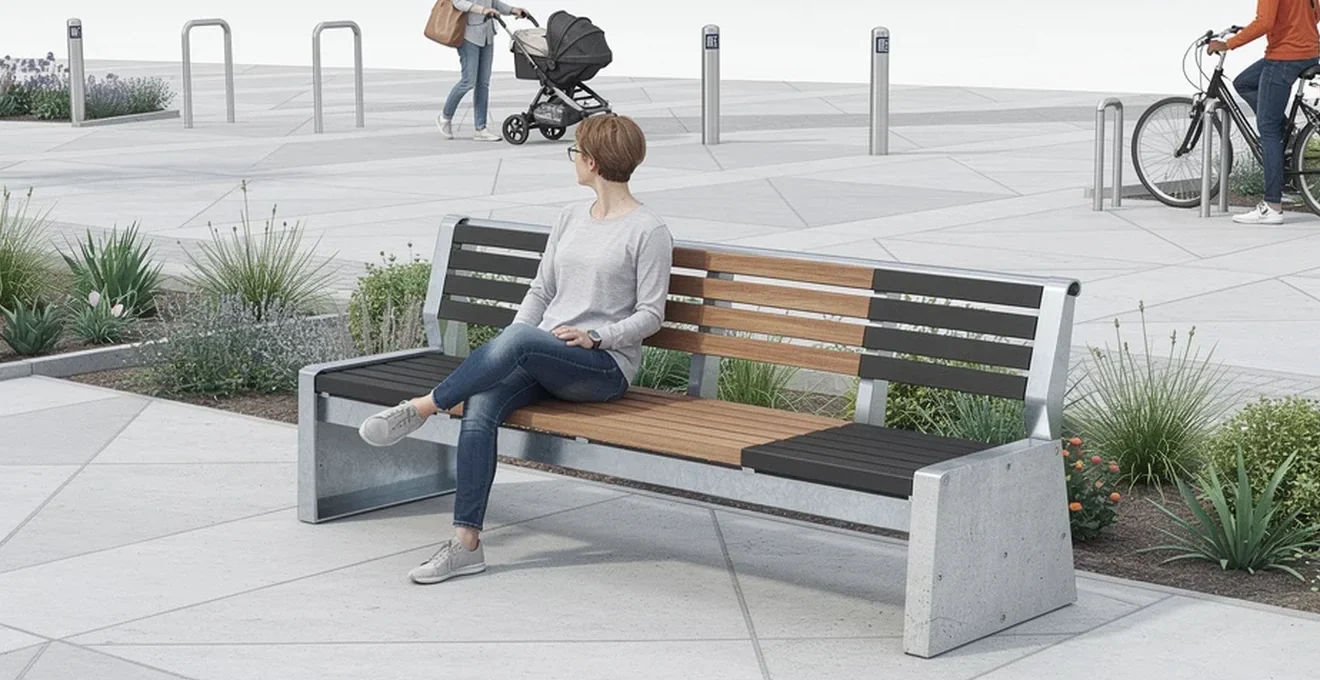
Choosing the right street furniture is about far more than picking an attractive bench or a smart-looking bin. Every item placed in a public space has to withstand years of weather, heavy footfall and, in some cases, deliberate misuse, while still meeting accessibility standards and local planning requirements. Get it right, and you create a streetscape that feels safe, welcoming and easy to maintain. Get it wrong, and you end up with premature replacements, unhappy councils and public spaces that fail the people they were meant to serve. This guide walks through the practical considerations that matter most when specifying street furniture, from assessing site-specific demands and choosing durable materials, to integrating sustainability principles and learning from successful public realm schemes across the UK and Europe.
Defining the functional requirements of urban street furniture
Before any material or design decision is made, it is essential to understand exactly what a piece of street furniture needs to do, who will use it, and where it will sit within the wider public realm strategy. Street furniture must balance function, durability and visual impact, and this balance shifts depending on whether the installation sits on a busy high street, within a heritage conservation area, or beside a transport hub.
Assessing footfall patterns and Site-Specific usage demands
High-footfall locations such as transport interchanges, school entrances and retail high streets place very different demands on furniture compared with quiet residential streets or parkland. In these busier settings, seating, bins and cycle stands need to be positioned without obstructing pedestrian routes, tactile paving or accessibility zones. Bins, for example, should generally maintain a minimum clear footway width of 1.5 metres in busy pedestrian areas, while cycle parking should follow similar clearance guidance to accommodate wheelchair users and those with mobility aids.
Understanding footfall also informs how robust materials need to be. A bench in a quiet park may only need to withstand general weathering, whereas seating on a busy commuter route must cope with constant use, spills and a higher risk of vandalism.
Distinguishing between primary amenity and ornamental furniture
Not all street furniture serves the same purpose. Primary amenity items, such as benches, litter bins and bollards, provide essential function and are typically specified first in any public realm project. Ornamental furniture, including planters and decorative bollards, contributes to place-making and visual cohesion but is secondary to core accessibility and safety requirements. When budgets are tight, it is the primary amenity items that should retain priority, since compromising on these can create genuine accessibility or safety issues rather than simply reducing visual appeal.
Aligning furniture selection with local authority planning regulations
In England and Wales, the Highways Act 1980 governs the installation of street furniture on public highways, setting out rules around obstructions, public rights of way and the requirement for local authority consent before placing items like benches or bins on pavements or verges. Any signage or branding integrated into street furniture, such as advertising on shelters or noticeboards, must also comply with the Town and Country Planning (Control of Advertisements) Regulations 2007.
Local authorities assess proposals against public safety, accessibility, pedestrian flow and alignment with local streetscape guidance, and they may charge application or inspection fees. Failure to secure the correct permissions can result in enforcement action, with fines for unauthorised installations reaching £5,000 in a Magistrates’ Court and unlimited fines in the Crown Court where safety hazards or access obstructions are involved.
Universal design principles and DDA-Compliant accessibility standards
Accessibility must be designed in from the outset rather than retrofitted. Under the Equality Act, outdoor seating should include armrests and backrests, a seat height of approximately 450–480mm, and be positioned to preserve clear pedestrian routes. Bollards should be detectable by long canes and offer sufficient contrast with their surroundings for visually impaired pedestrians, with the Department for Transport recommending a minimum clear width of 1.5 metres between bollards to accommodate wheelchairs and guide dogs.
Pedestrian footways more broadly should maintain a minimum unobstructed width of 1.2 metres, though many authorities, including Transport for London and Inclusive Mobility guidance from the Department for Transport, recommend 1.5 to 2.0 metres in high-footfall or transport-adjacent locations.
Material selection: durability versus aesthetic value
Material choice is arguably the single most consequential specification decision. It determines lifespan, maintenance burden and how well furniture copes with its specific environment, whether that is a coastal seafront, an industrial estate or a quiet conservation village.
Galvanised steel and Powder-Coated metal finishes for High-Traffic zones
Hot-dip galvanised or powder-coated steel is a common specification for benches, bins and bollards in high-traffic urban and transport environments, offering longevity and easier maintenance than softer materials. Where coatings are applied, they should comply with ISO 12944-6 for corrosion resistance, particularly important in harsh or polluted environments. Powder coatings also offer scope for RAL colour customisation and anti-graffiti properties, helping furniture stay visually consistent with paving, lighting and planting schemes.
Fsc-certified timber and its weathering characteristics
FSC-certified hardwoods remain a popular choice for benches, particularly in rural settings, conservation zones and heritage-led high streets, where timber finishes with traditional styling help preserve local character. Timber requires rating for long-term outdoor exposure and minimal maintenance; natural weathering to a silver-grey finish is generally considered acceptable and low-maintenance, provided the species and thickness are specified correctly rather than left as a generic “hardwood” description.
Recycled plastic lumber as a Low-Maintenance alternative
UV-stable polyboards and recycled plastic options offer a low-maintenance, eco-responsible alternative to timber, particularly where budgets or maintenance resources are constrained. These materials resist rot, insect damage and colour fade, making them well suited to locations where councils want to minimise recurring maintenance visits without sacrificing durability.
Cast iron and concrete applications for Heritage-Style installations
In areas of historical or architectural significance, Historic England guidelines call for materials and designs that align with conservation objectives. Cast iron frames, such as those used in traditional bollards and benches, are often favoured in these settings for their durability and sympathetic period detailing. Concrete, similarly, can provide a robust and low-maintenance base for planters or bollards in heritage zones where a more solid, permanent aesthetic is required.
Corrosion resistance and Anti-Vandal coatings in coastal or industrial environments
Coastal and industrial locations demand higher levels of corrosion resistance due to salt spray, pollution and humidity. Marine-grade powder coatings compliant with ISO 12944-6 for C4 and C5 environments provide enhanced protection in these conditions. Anti-vandal and anti-graffiti finishes are equally important in high-risk urban areas, reducing lifetime maintenance costs and helping furniture retain its appearance for longer between council interventions.
Core categories of street furniture and their placement strategy
Each category of street furniture has its own placement logic, shaped by regulation, user behaviour and the physical constraints of the site.
Bench typologies: from cantilever benches to modular seating pods
Bench design ranges from simple cantilever styles to modular seating pods that can be reconfigured for different events or footfall patterns. Cast iron-framed benches with FSC-certified timber slats remain a popular choice for public seating, offering a balance of traditional styling and robust performance suited to high-use environments. Whatever the typology, seating must be positioned to preserve minimum pedestrian clearance widths and should never compromise tactile paving or accessibility zones.
Litter bins and Dual-Stream recycling units for waste management
Litter bins must be fully enclosed and weather-sealed to prevent rainwater ingress, reduce odour and deter vermin, in line with environmental health standards and DEFRA waste strategy guidance. In high-traffic zones such as high streets, transport stations and stadiums, bins should be constructed from robust materials including galvanised steel, cast iron or UV-stable polymers, with compliance to BS EN 13071-1:2008 increasingly cited in public procurement contracts.
Dual-compartment bins, which separate general waste from recyclables, are increasingly specified by councils working towards targets set out in the Resources and Waste Strategy for England. Bright, high-visibility colours have also been shown to increase usage rates, a principle supported by data from the recycling charity WRAP.
Bollards, cycle stands and pedestrian guardrail systems
Bollards must be placed to maintain accessible, obstruction-free routes, with a minimum clear width of 1.5 metres between units. Removable or lockable bollards are often specified where emergency or maintenance vehicle access is required, allowing temporary removal without compromising pedestrian safety when in place.
For cycle parking, Sheffield stands are widely regarded as the minimum security standard, since they allow both frame and wheels to be locked. Two-tier racks with locking mechanisms and CCTV coverage are recommended for higher-risk locations. As with bollards, a minimum clearance of 1.5 metres around cycle parking is recommended to maintain pedestrian accessibility, and installations should align with wider policy goals such as the UK’s Cycling and Walking Investment Strategy.
Bus shelters, canopy structures and passenger information displays
Shelters and canopy structures need to combine weather protection with clear sightlines and accessible information displays. Materials such as galvanised steel frames and UV-stable polycarbonate roofing are commonly specified for their durability and weather resistance. Passenger information should be positioned for visibility and contrast, supporting wayfinding for all users, including those with visual impairments.
Integrating sustainability and circular economy principles
Sustainability is no longer a secondary consideration in street furniture specification; it increasingly shapes procurement decisions from the outset.
Life cycle assessment (LCA) for street furniture procurement
Modern streetscape planning increasingly involves lifecycle analysis, assessing not just how products are installed but how they will be managed, maintained and eventually removed or upgraded. This total cost of ownership approach considers repairs, replacement parts, repainting and the risk of premature product failure, rather than focusing solely on initial procurement cost. Products with modular components, such as replaceable slats, fixings or side panels, allow for repair without full unit replacement, extending service life and reducing waste.
Sourcing from manufacturers with Cradle-to-Cradle certification
FSC-certified hardwoods and treated softwoods support sustainability goals while maintaining strength, and recycled plastic or galvanised steel options appeal to buyers prioritising low-maintenance, eco-responsible materials. End-of-life planning, including recyclability of materials and documentation to support circular economy reporting, is increasingly requested by public sector clients and should be confirmed with manufacturers before specification.
Solar-powered lighting bollards and smart bench technology
Integrated features such as LED or solar-powered lighting improve safety and usability in low-light conditions, particularly around cycle parking and pedestrian routes. Future-proofed product designs that allow for upgrade paths or integration with smart technology as needs evolve are becoming a more common requirement in forward-looking public realm briefs.
Safety, Anti-Vandalism and Long-Term maintenance considerations
Durability is not solely about weather resistance; it also depends on how well furniture resists misuse and how easily it can be maintained over its working life.
Anti-climb and Anti-Skateboard design features
Reinforced construction is essential in high-traffic and high-risk zones such as high streets, transport stations and stadiums. Specifications typically include galvanised steel, cast iron or UV-stable polymers, sometimes combined with internal fire liners or ground-fixings to withstand vandalism and frequent use. Anti-graffiti coatings and vandal-resistant finishes, available across many product ranges, further reduce lifetime maintenance costs.
Fire-retardant treatments for Timber-Based installations
Timber-based street furniture in high-footfall or high-risk areas may require additional fire-retardant treatment or internal fire liners within bins, particularly where frequent emptying and public access increase the risk of ignition. This is especially relevant for installations near transport hubs or stadiums, where compliance is often written directly into public procurement contracts.
Establishing preventive maintenance schedules with local councils
A clear maintenance schedule, agreed with the local council or facilities management team, helps protect the long-term value of an installation. This includes routine cleaning, periodic fixing inspections and a defined process for replacing modular parts before they fail completely. Councils that adopt enhanced coatings and tamper-resistant fixtures have reported measurable reductions in reactive maintenance costs, underlining the value of specifying for lifecycle performance rather than upfront price alone.
Case studies of successful public realm furniture schemes
The southbank centre’s riverside seating redevelopment, london
Riverside public realm schemes in London illustrate how seating and amenity furniture can be integrated into a high-footfall, mixed-use environment while respecting sightlines to the water and surrounding cultural buildings. Durable, low-maintenance materials and clear accessible routes are essential in such settings, where visitor numbers place sustained pressure on every element of the streetscape.
Barcelona’s superblock (superilla) urban furniture integration
Barcelona’s superblock model reallocates street space away from vehicles and towards pedestrians, cyclists and communal furniture such as seating, planters and play equipment. The approach demonstrates how street furniture can actively support behavioural change in public space use, encouraging residents to linger, socialise and engage with their immediate neighbourhood rather than simply passing through it.
Copenhagen’s strøget pedestrian zone street furniture design
Copenhagen’s pedestrianised Strøget shows how coordinated street furniture, consistent materials and clutter-free layouts can support high volumes of foot traffic while preserving a coherent visual identity. The zone’s long-standing pedestrian priority reflects many of the same principles UK councils now apply through public realm design codes: cohesive finishes, multi-functional furniture and a clear focus on accessibility for all users.