Environment & Future
The relationship between our daily choices and the planet’s future has never been more interconnected. As environmental challenges intensify, from climate disruption to resource depletion, individuals and communities increasingly seek meaningful ways to align their lifestyles with ecological responsibility. Yet the path forward can feel overwhelming, obscured by conflicting information, marketing claims, and the sheer complexity of interconnected environmental systems.
This comprehensive exploration of environment and future sustainability demystifies the core areas where personal action intersects with planetary impact. From transforming consumption habits and decoding corporate greenwashing to understanding carbon accounting, sustainable materials, water stewardship, and collective renewable energy initiatives, we’ll examine the practical, science-based approaches that empower informed environmental decision-making. Whether you’re taking your first steps toward sustainable living or deepening existing commitments, understanding these foundational concepts creates a roadmap for authentic, lasting change.
Embracing Zero-Waste and Mindful Consumption
The zero-waste movement represents far more than simply recycling better—it fundamentally reimagines our relationship with resources. At its core lies a simple principle: waste is a design flaw, not an inevitable byproduct of modern life. For families working within budget constraints, this philosophy often translates into financial savings, as reducing waste typically means purchasing less and using resources more efficiently.
The psychological barriers to sustainable consumption, particularly around second-hand purchases, reveal fascinating insights into human behavior. Many people experience an unconscious resistance to pre-owned items, associating them with lower status or hygiene concerns, despite identical functionality. Recognizing these mental patterns as culturally constructed rather than rational helps dismantle them. Meanwhile, bulk buying eliminates packaging waste while often reducing per-unit costs, though it requires upfront planning and storage capacity.
A critical distinction worth understanding involves comparing disposable versus reusable household items across their full lifecycle. A reusable water bottle, for instance, typically breaks even environmentally after just a few dozen uses compared to single-use alternatives. However, the sustainability equation changes when considering:
- Manufacturing impact and embodied energy of the reusable item
- Expected lifespan and durability under typical use conditions
- Washing requirements and associated water/energy consumption
- End-of-life recyclability or biodegradability
Perhaps paradoxically, one emerging challenge in sustainable living involves avoiding the trap of over-purchasing “green” gadgets. Buying a new bamboo product you don’t actually need remains fundamentally less sustainable than using what you already own. Food preservation optimization—through proper storage techniques, understanding expiration date labels, and creative leftover transformation—prevents waste at the source while honoring the resources invested in food production.
Decoding Greenwashing and Sustainability Claims
As environmental consciousness grows, so does the sophistication of corporate greenwashing—the practice of conveying misleading impressions about environmental practices. Companies increasingly plaster products with nature imagery and vague environmental language while substantive practices remain unchanged. Identifying these deceptive tactics requires understanding common patterns.
The vagueness of unregulated buzzwords represents greenwashing’s most pervasive form. Terms like “eco-friendly,” “natural,” “green,” or “sustainable” carry no standardized definitions or verification requirements. Think of them as environmental marketing poetry—evocative but unaccountable. A product labeled “made with recycled materials” might contain just 2% recycled content, while the remaining 98% follows conventional production.
Third-party certifications provide more reliable guideposts, though understanding their distinct standards proves essential. The difference between certifications like B Corp and Fair Trade illustrates this complexity. B Corp certification evaluates a company’s entire social and environmental performance, governance structure, and transparency across all operations. Fair Trade, conversely, focuses specifically on equitable trading relationships, ensuring farmers and workers receive fair compensation and work under acceptable conditions.
The “halo effect” in branding creates another subtle challenge: when a company performs well in one sustainability area, consumers often unconsciously assume excellence across all environmental dimensions. A brand with exemplary labor practices might still source unsustainably harvested materials, or a company pioneering renewable energy might generate excessive packaging waste. Critical evaluation requires examining specific, relevant criteria rather than general brand perception.
Reducing Your Carbon Footprint Through Daily Choices
Your personal carbon footprint encompasses all greenhouse gas emissions attributable to your lifestyle choices. While individual action alone cannot solve climate change—systemic transformation remains essential—understanding your impact empowers informed decision-making and creates cultural momentum for broader change.
Dietary choices represent one of the most significant carbon levers available to individuals. Food production accounts for roughly one-quarter of global emissions, with animal agriculture particularly carbon-intensive due to methane emissions from livestock and land-use changes for grazing and feed crops. Reducing meat and dairy consumption, even partially, creates measurable impact. Plant-based proteins typically require far less land, water, and energy while generating fewer emissions per gram of protein delivered.
Home energy consumption offers another high-impact area for intervention. Auditing your home for energy leaks—through windows, doors, attics, and ductwork—reveals often-invisible waste. Simple improvements like weatherstripping, insulation upgrades, and LED lighting conversions reduce both emissions and utility costs. Think of energy efficiency as harvesting negawatts: the cheapest, cleanest energy is the energy you never use.
Transportation decisions compound over time into substantial carbon implications. The electric vehicle versus public transport comparison doesn’t yield a universal answer; context matters enormously. In regions with clean electricity grids, EVs offer dramatic emissions reductions. However, frequent public transport use typically outperforms even electric vehicles due to efficiency of scale—moving many people simultaneously. For those requiring personal vehicles, driving habits (gentle acceleration, proper tire pressure, reduced idling) impact efficiency significantly.
The error of “wish-cycling”—tossing questionable items into recycling bins and hoping for the best—actually undermines recycling systems. Contaminated recycling loads often get diverted to landfills, and processing non-recyclable materials wastes energy and resources. Understanding your local recycling capabilities prevents this well-intentioned sabotage.
Understanding Carbon Offsetting and Emissions Accounting
For emissions that cannot be eliminated through efficiency and behavior changes, carbon offsetting offers a supplementary strategy. However, the carbon offset market’s complexity demands careful navigation to ensure genuine environmental benefit rather than modern indulgences—environmental absolution purchased without meaningful impact.
Credible offsetting begins with accurate emissions accounting. Businesses and organizations increasingly calculate Scope 1, 2, and 3 emissions:
- Scope 1: Direct emissions from owned or controlled sources (company vehicles, on-site fuel combustion)
- Scope 2: Indirect emissions from purchased electricity, heating, and cooling
- Scope 3: All other indirect emissions throughout the value chain (supplier emissions, product transportation, business travel, employee commuting)
Scope 3 typically represents the largest portion yet proves hardest to measure accurately. Small businesses attempting to offset unavoidable emissions should prioritize Scope 1 and 2 calculations initially, expanding to Scope 3 as systems mature.
The distinction between removal offsets and avoidance offsets fundamentally shapes offset quality. Removal offsets actively extract existing carbon from the atmosphere (reforestation, direct air capture, enhanced mineralization). Avoidance offsets prevent emissions that would otherwise occur (renewable energy projects displacing fossil fuels, forest conservation preventing deforestation). While both have roles, removal offsets address atmospheric carbon concentrations more directly.
Carbon sequestration permanence raises critical questions: will captured carbon remain stored for centuries, or might it return to the atmosphere through forest fires, land-use changes, or project abandonment? High-quality offsets guarantee long-term storage through legal mechanisms and monitoring. The risk of double-counting credits—where the same emission reduction gets claimed by multiple parties—undermines market integrity, making third-party verification registries essential for optimizing offset portfolios.
Sustainable Materials: Responsible Forestry and Timber Choices
Material choices for home renovation, furniture, and everyday products carry environmental implications extending far beyond the finished product. Wood and paper sourcing decisions connect directly to forest ecosystem health, biodiversity, and carbon storage capacity.
Forest Stewardship Council (FSC) labels provide the most widely recognized forest certification, yet even here nuances exist. FSC 100% indicates all wood originates from FSC-certified forests. FSC Mix combines certified wood with controlled sources (verified legal, non-controversial origin). FSC Recycled contains only reclaimed materials. Understanding these distinctions prevents assuming all FSC labels offer identical environmental assurance.
Identifying endangered wood species protects irreplaceable forest ecosystems. Species like Brazilian rosewood, Burmese teak, and various African mahoganies face extinction pressure from illegal logging and habitat loss. Reputable suppliers provide species information and sourcing documentation; vagueness often signals problematic origins. The risk of illegal timber appearing in cheap furniture remains substantial, particularly with imports from regions with weak forest governance.
The bamboo versus wood sustainability debate illustrates how seemingly simple comparisons contain complexity. Bamboo grows extraordinarily rapidly—some species achieve maturity in just three to five years compared to decades for hardwood trees—and regenerates without replanting after harvest. However, industrial bamboo production increasingly involves monoculture plantations replacing diverse forests, chemical processing for certain applications, and long-distance transportation emissions. Locally harvested, sustainably managed wood sometimes offers lower environmental impact than imported bamboo products, depending on specific circumstances.
Water Conservation and Community Renewable Energy
Water scarcity increasingly affects regions previously considered water-secure, making conservation practices relevant far beyond traditionally arid areas. Simultaneously, community-scale renewable energy projects demonstrate how collective action amplifies individual impact.
Residential Water Conservation Strategies
Residential gardening consumes substantial household water, yet multiple strategies dramatically reduce requirements without sacrificing plant health. Understanding soil water retention mechanics provides the foundation: organic matter in soil acts like a sponge, holding moisture available to plant roots while improving soil structure. Incorporating compost, mulching heavily, and selecting regionally appropriate plants creates naturally water-efficient landscapes.
Greywater systems capture water from sinks, showers, and washing machines for landscape irrigation, effectively using water twice. Installation complexity ranges from simple bucket systems to sophisticated plumbed networks with filtration and distribution controls. Even basic greywater reuse can reduce outdoor water consumption by 30-50% in typical households.
The drip irrigation versus soaker hoses comparison involves tradeoffs between precision and simplicity. Drip systems deliver water directly to root zones with minimal evaporation, offering superior efficiency and adaptability to complex garden layouts. Soaker hoses provide simpler installation and lower costs while still dramatically outperforming overhead sprinklers. The error of watering at the wrong time—during midday heat when evaporation peaks—wastes significant water regardless of delivery method. Early morning watering maximizes plant uptake while minimizing fungal disease risks.
Rainwater harvesting capacity optimization considers collection surface area, local precipitation patterns, and storage volume. A modest roof can capture thousands of gallons annually; calculating your specific potential helps right-size storage investments.
Community Renewable Energy Projects
Organizing community renewable energy initiatives leverages collective resources to overcome barriers prohibiting individual action. Shared solar gardens, community wind projects, and neighborhood microgrids distribute costs, risks, and benefits across participants.
Understanding grid connection hurdles proves critical for project viability. Utility interconnection requirements, safety standards, and net metering policies vary dramatically by jurisdiction. Navigating grant applications and incentive programs often determines financial feasibility; numerous government and nonprofit funding sources support community renewable projects, though application processes demand careful attention to eligibility criteria and reporting requirements.
The solar versus wind comparison for small communities depends heavily on local resource availability. Solar installations offer more predictable output patterns and simpler permitting, while wind potentially delivers more energy per dollar invested in suitable locations. The error of underestimating maintenance costs derails numerous projects; professional maintenance contracts, component replacement reserves, and insurance must factor into financial planning. Timing installations to capture available tax credits and incentives maximizes economic returns, though chasing expiring incentives sometimes leads to rushed, suboptimal decisions.
Environmental stewardship ultimately emerges from understanding interconnections—between consumption and waste, claims and reality, individual choices and collective impacts. Each decision, informed by knowledge rather than assumption, contributes to the larger transformation our environmental future demands. The complexity need not paralyze; instead, it invites continuous learning, adaptation, and the recognition that progress, not perfection, creates meaningful change.
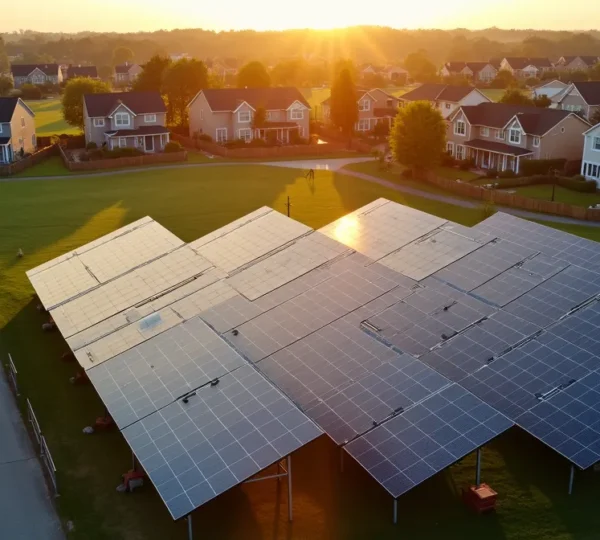
How to Successfully Launch a Community Solar Project in Your Neighborhood
Launching a community solar project is less about engineering and more about mastering the strategic game of finance, policy, and utility negotiations. Utilities can use multi-million dollar “interconnection fees” to delay or kill projects; you must have a legal and…
Read more
How to Maintain a Lush Garden During a Drought Without Breaking Bans?
In summary: Transform your soil into a “water sponge” with compost to drastically cut watering needs. Harvest and reuse “waste” water from your home, like laundry or roof runoff. Deliver water directly to plant roots using drip irrigation to eliminate…
Read more
How to Ensure Your New Flooring Is Not From an Endangered Rainforest?
Sustainably sourcing wood is not about trusting logos; it’s a strict procurement process of verification that you, the homeowner, must own. “FSC Mix” does not guarantee your specific plank is from a certified forest; it’s a risk-mitigation system for the…
Read more
How to Buy Valid Carbon Offsets That Are Not Scams?
Contrary to popular belief, a third-party logo from a registry is not a guarantee of a carbon offset’s quality; it is merely the starting point for your own due diligence. True validation requires a risk-based audit of an offset’s permanence,…
Read more
How to Cut Your Personal Carbon Emissions by 2 Tonnes a Year?
In summary: Focus on high-leverage changes in diet, home energy, and travel for the biggest impact. A few key swaps, like reducing beef intake or substituting one short-haul flight, often outweigh dozens of smaller, unmeasured actions. Understanding the math behind…
Read more
Your Field Guide to Spotting Greenwashing: How to Expose Fake Sustainability Claims
Contrary to popular belief, spotting greenwashing isn’t about looking for green leaves on a package; it’s about exposing the legal loopholes and psychological tricks behind them. Vague terms like “natural” or “eco-friendly” are legally meaningless and designed to mislead, not…
Read more
How to Reduce Household Waste by 50% Without Increasing Your Monthly Budget?
In summary: Focus on waste prevention systems, not just buying “eco” products, to save money. Master food storage and bulk buying, even in small spaces, to drastically cut your grocery bill and food waste. Learn to identify marketing traps and…
Read more